

In this guide
The short answer
If your washing machine is noisy during the spin, there are five possible causes: the transit bolts still fitted or feet that are not level, an unbalanced load, an object that has got between the drum and the tub, worn shock absorbers and, in the worst cases, the bearings. The first three need no spare parts; the shock absorbers can be replaced in about an hour and usually cost around €10 each.
Before you start: unplug the machine and close the tap before removing any panel. The washing machine is heavy: get someone to help you tilt or move it. If a step makes you uneasy, stop and call a technician.
Washing machine noisy during the spin: how to identify the problem
A washing machine always makes some noise during the spin, but it should not bang, jump or move about. The type of noise already tells you a lot about the cause:
| What you notice | Likely cause |
|---|---|
| Loud bangs, the washing machine jumps or moves; it is new or has just been moved | Transit bolts still fitted or feet not level |
| Vibration and bangs only with some washes, for example with a rug or a single heavy item | Unbalanced load |
| Ticking or metallic rattling that changes with speed | Foreign object (coin, underwire, screw) |
| Loud bangs at every spin, the tub knocks and the washing machine dances even with a well-distributed load | Worn shock absorbers |
| Continuous rumble that grows with speed, drum with play | Worn bearings |
1. Check the transit bolts and the feet
It is the first thing to look at on a washing machine that is new, has just been installed or has just been moved, and it costs nothing.
- The transit bolts: at the back, at the top, there are three or four large screws with plastic spacers. They lock the drum during transport and must be removed before use. If they are still fitted, the washing machine bangs and jumps violently. Remove the screws and spacers and close the holes with the caps supplied.
- The feet: the washing machine must stand firmly on all four feet, level. Check with a spirit level and try pushing it diagonally: if it rocks, adjust the feet and tighten the lock nuts.
- The floor: on an elastic floor (for example a wooden one) the vibrations increase. An anti-vibration mat under the feet helps.
- The gap: leave a few centimetres between the washing machine, the wall and the furniture, so that it does not knock against them and the noise is not amplified.
2. Check the load
If the noise only happens with certain washes, the problem is the load: a rug, a duvet or a single heavy item bunches up on one side and unbalances the drum. Fill it to three quarters at most and spread the laundry out. You will find the details in the guide washing machine not spinning: 5 causes and what to check.
3. Look for an object between the drum and the tub
Coins, bra underwires, screws and keys forgotten in pockets can end up between the drum and the tub and cause a ticking or metallic rattling that changes with speed. Sometimes they get stuck in the pump filter.
- Empty the drum thoroughly Look between the door seal and the glass: small objects often end up there.
- Look through the holes in the drum With a torch, look for an object stuck between the drum and the tub. If you see one, remove it with long pliers.
- Check the pump filter Open it as described in the guide washing machine not draining: filter, hose or pump? and remove whatever you find.
- Try again Run an empty spin and listen to see whether the noise has gone.
4. Check the shock absorbers
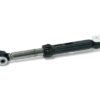
The shock absorbers are the two (sometimes four) cylinders that support the tub and damp its movement during the spin, like those on a car. Over the years they lose strength: the tub is no longer damped, it knocks against the walls and the washing machine dances and bangs loudly at every spin. If it carries on like this, it also damages the bearings and the panels.
- Do the hand test With the machine off and empty, open the door, push the drum down and release: it should rise slowly, without bouncing. If it bounces several times or gives way too easily, the shock absorbers are worn.
- Unplug the machine and get to the shock absorbers They are under the tub, between the tub and the base. On many models you reach them from the front or the rear panel; on others you have to tilt the washing machine backwards with someone’s help.
- Check each shock absorber Pull it out and try moving the rod: it should offer constant resistance. If it slides freely, or you see grease leaking, it needs replacing.
- Take a photo before removing anything Note how they are fitted and in which position, because left and right may be different.
- Always replace them as a pair Even if one still looks good: if you change only one, the other soon gives way and the tub is left unbalanced.
- Fit the new ones and test Insert the pins, recheck the retainers and run a spin to check that the noise has gone.
To choose the right one, look at three things: the force in newtons (80 N, 100 N, 120 N…), the length (short or long) and the type of mounting. The force is usually printed on the body. If you are in doubt, send us the model and serial number of your washing machine and we will tell you the right one.

Some of the shock absorbers we keep in the catalogue:
- Shock absorber 100 N for LG washing machines
- Shock absorber 100 N for Bosch washing machines
- Shock absorber 100 N for Ariston and Indesit washing machines
- Shock absorber 110 N for Beko washing machines
- Shock absorber 120 N for Zanussi and Candy washing machines
- Shock absorber 80 N for Samsung washing machines
The others are among the shock absorbers for washing machines. Can’t identify yours? Write to us on WhatsApp with the model and serial number.
5. Check the bearings
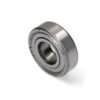
If the noise is a continuous rumble that grows with speed and the drum has play, it is the bearings, the two rings the drum turns on. To recognise them, do the play test: with the machine off and empty, grab the edge of the drum through the door and try to move it up and down. If it moves or makes a small “knock”, they are worn. Do not confuse them with the shock absorbers: bearings make a continuous rotating noise, shock absorbers make bangs and jumps.
Replacing the bearings is the most demanding job: you have to open the tub and remove the drum. If you have no experience, it is better to rely on a technician. If you decide to do it yourself, always replace both bearings together with the oil seal. The code is engraved on the bearing, for example 6203 ZZ, 6204 ZZ or 6205. You will find all the steps in the guide washing machine not spinning: 5 causes and what to check.

All the bearings are in the bearings for washing machines section, and the oil seals among the sealing rings and oil seals for washing machines.
When it is worth calling a technician
If you have checked the bolts, feet, load, objects, shock absorbers and bearings and the washing machine still bangs, the cause may be in the counterweights (the large blocks fixed to the tub and the drum, which loosen or crack over the years), in the suspension springs or in a deformed drum. These are faults that require dismantling and tools: if the washing machine is still under warranty, it is better not to take it apart and to call a technician.
Frequently asked questions
Why is my washing machine so noisy and why does it jump during the spin?
The most frequent causes are transit bolts still fitted (on a new machine or one that has just been moved), feet that are not level, an unbalanced load and worn shock absorbers. Check them in this order: the first three cost nothing.
I have just installed the washing machine and it is very noisy: what can I do?
Check the transit bolts, the three or four large screws at the back with plastic spacers: they must be removed before use. Then adjust the feet with a spirit level, so that it stands firmly on all four.
How do I tell whether it is the shock absorbers?
With the machine off and empty, open the door, push the drum down and release: if it bounces several times instead of rising slowly, the shock absorbers are worn. The typical symptom is a washing machine that dances and bangs at every spin.
Can I use the washing machine with worn shock absorbers?
It is better not to: the tub knocks against the walls and over time damages the bearings, the panels and even the tub. Replacing them costs little and it is best to do it soon.
How do I choose the right shock absorber?
Look at the force in newtons (80 N, 100 N, 120 N…), the length and the type of mounting. The force is usually printed on the body. If you are in doubt, send us the model and serial number and we will tell you which one.
How do I tell bearings from shock absorbers?
Bearings make a continuous rumble that grows with speed and the drum has play when you move it by hand. Shock absorbers make bangs and jumps, especially with a full load, and the tub bounces if you push it down.
How much do shock absorbers and bearings cost?
In our catalogue, washing machine shock absorbers cost from about €10 to €24 including VAT, most of them around €10. Bearings cost from about €4 to €52, most of them between €5 and €20.
Written by Di Gesù Ricambi. We have been selling appliance spare parts in Trapani since 1977, and every day we help customers and technicians find the right part.


 Account
 Categories

 Top